
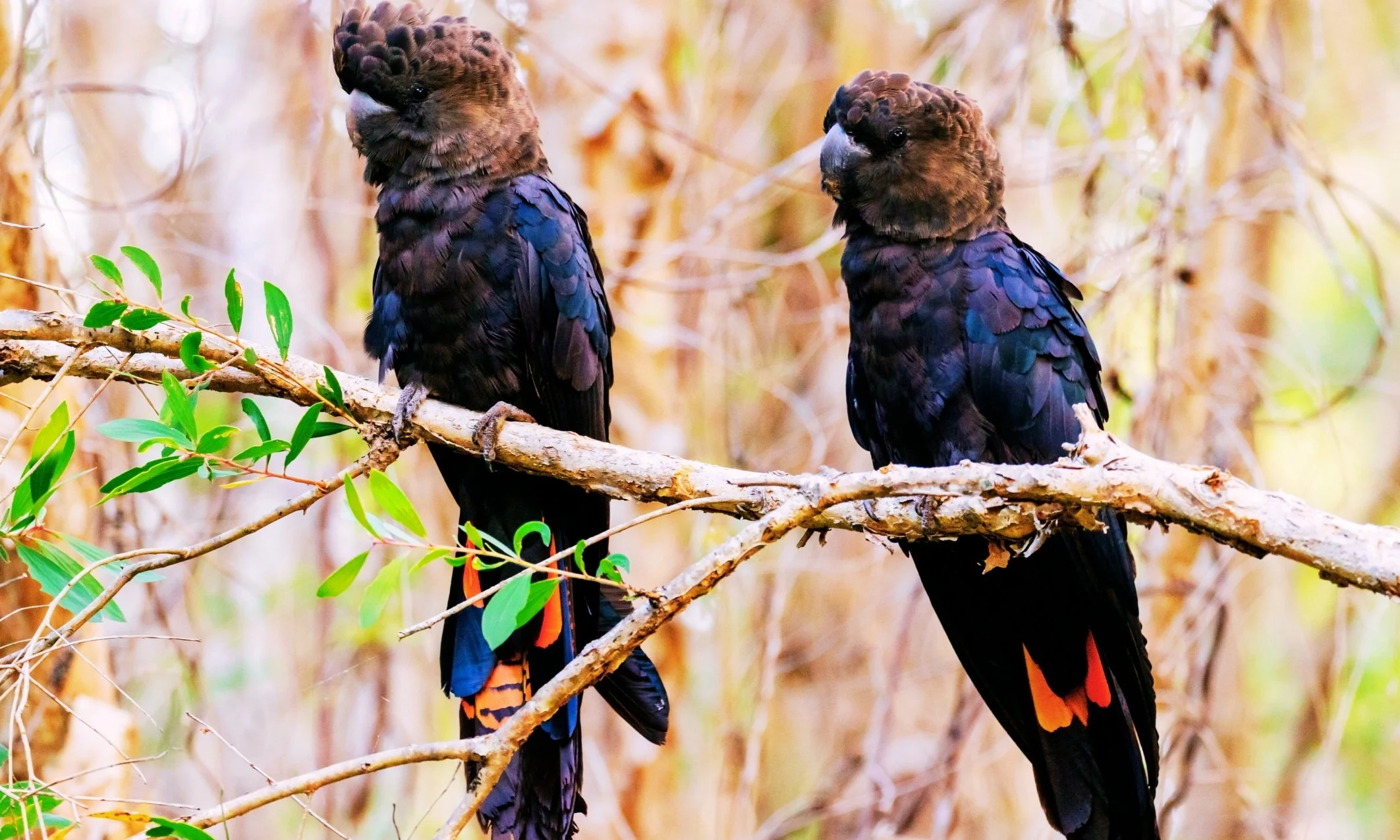
Help us plant today for the
Glossy Black-Cockatoos of tomorrow.
You can help by:
Joining us for tree planting at Boambee Headland
Registering for our Feed Tree Giveaway
Becoming a Glossy Spotter and helping collect valuable data to support this Vulnerable species
Registration and details below.
Tree Planting
Friday 4 September 9 - 11 am
Boambee Headland
Join us to plant 200 she-oaks and other species to promote biodiversity and to support the Glossy Black-Cockatoo at Boambee Headland, a known feeding location!
Register Below
Feed Tree Giveaway
Are you a rural landowner who could plant feed trees on your property?
We are looking for rural landowners who could plant and care for a grove of she-oaks, Allocasuarina sp. on their land.
She-oaks take at least 5 years from planting, and up to 15 years after fire, to produce food for Glossy Black-Cockatoos. Planting suitable feed trees now can help ensure birds have enough food in the future.
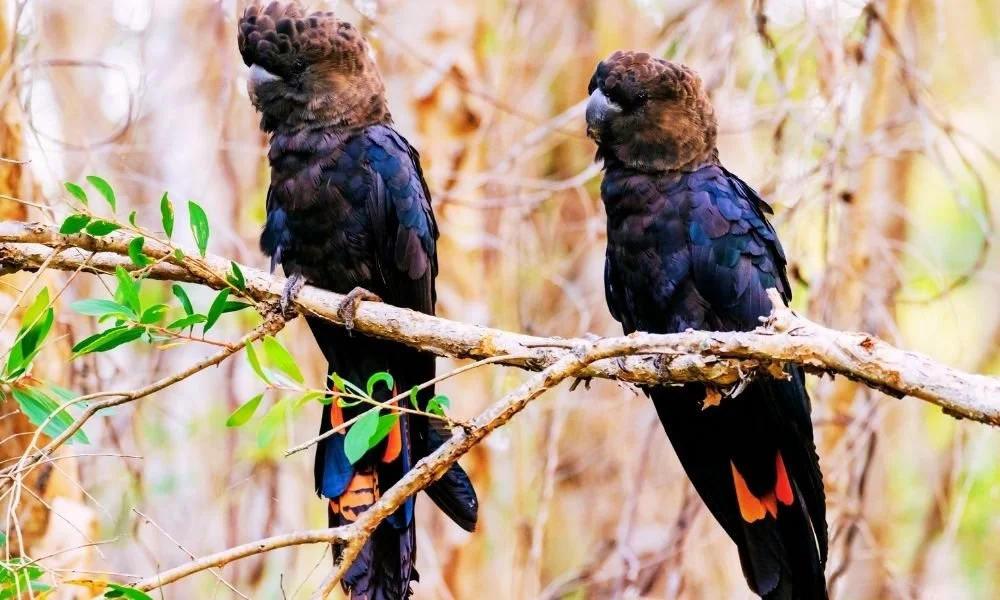
Register Interest Below
We are currently looking for landowners in the City of Coffs Harbour and Bellingen Shire but you can register your interest for other areas and be notified when tress become available. Become a Glossy Black Spotter !
Join the citizen science effort working to support this species
Understanding where Glossy Black-Cockatoos live, nest and feed is essential for protecting them. Every sighting, every record of a feed tree, and every nesting observation helps build our national knowledge base for this species.
Citizen science data collected through projects like the Great Glossy Count supports habitat protection, bushfire recovery, and development of the National Recovery Plan.
-
Follow the link to enter the data
https://survey123.arcgis.com/share/90cf46827e05487fb9ca6e66614a3e19
-
Instructions:
Download the app - Survey 123
Option 3 - Field sightings ( if required)
Continue without signing in (or set up a sign in if you want to)
Click on Biliirrgan Glossy Black-Cockatoo...
Click on Collect to start a field survey and enter your data
Submit your data and photos if you have them
-
Aussie Bird Count
The Aussie Bird Count will be back 19-25 October 2026
Learn more
about this vulnerable species
Check out the Birdlife Australia South-eastern Glossy Black-Cockatoo Field Guide.
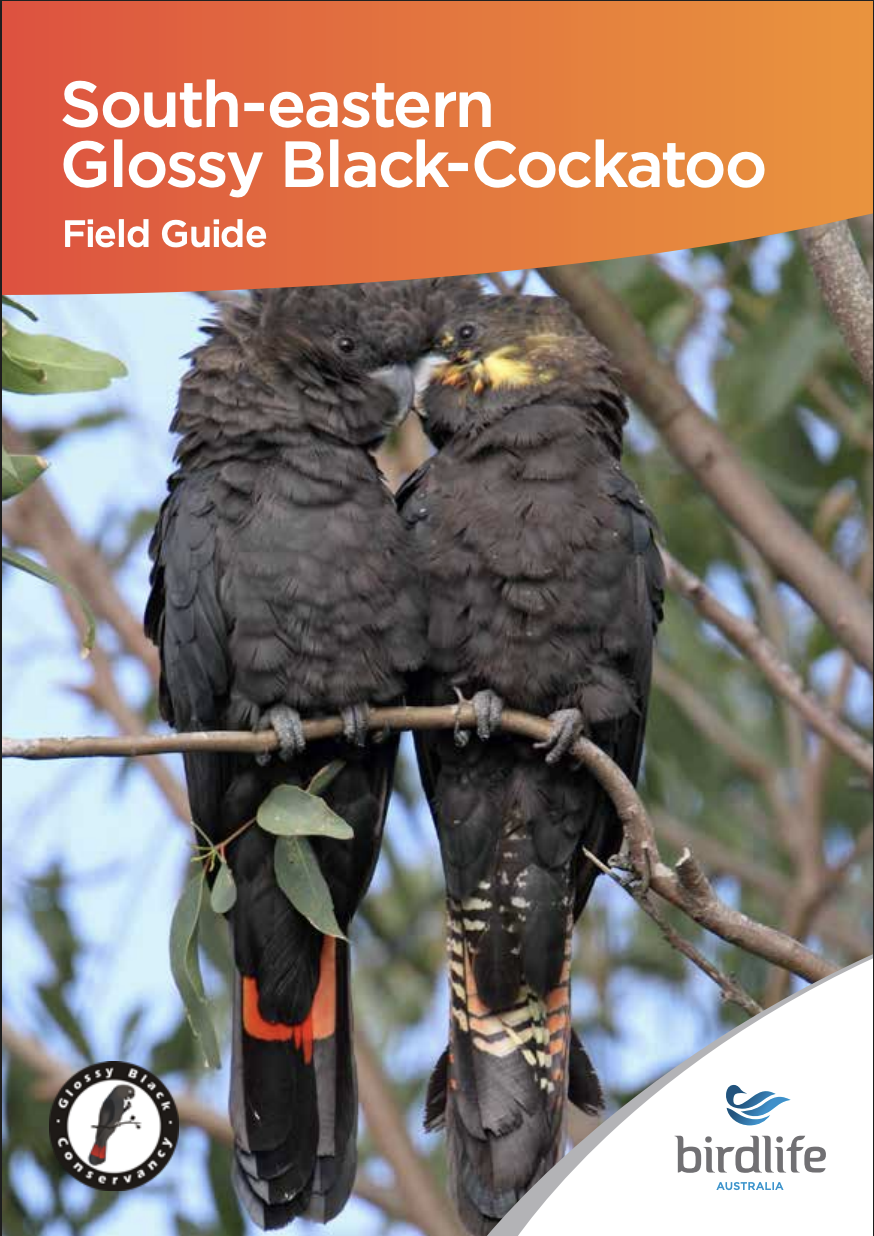
More about the Glossy Black
The South-eastern Glossy Black-Cockatoo is classified as Vulnerable in Queensland, New South Wales and the ACT, and Critically Endangered in Victoria. Nationally, it is listed as Vulnerable under the Environment Protection and Biodiversity Conservation Act.
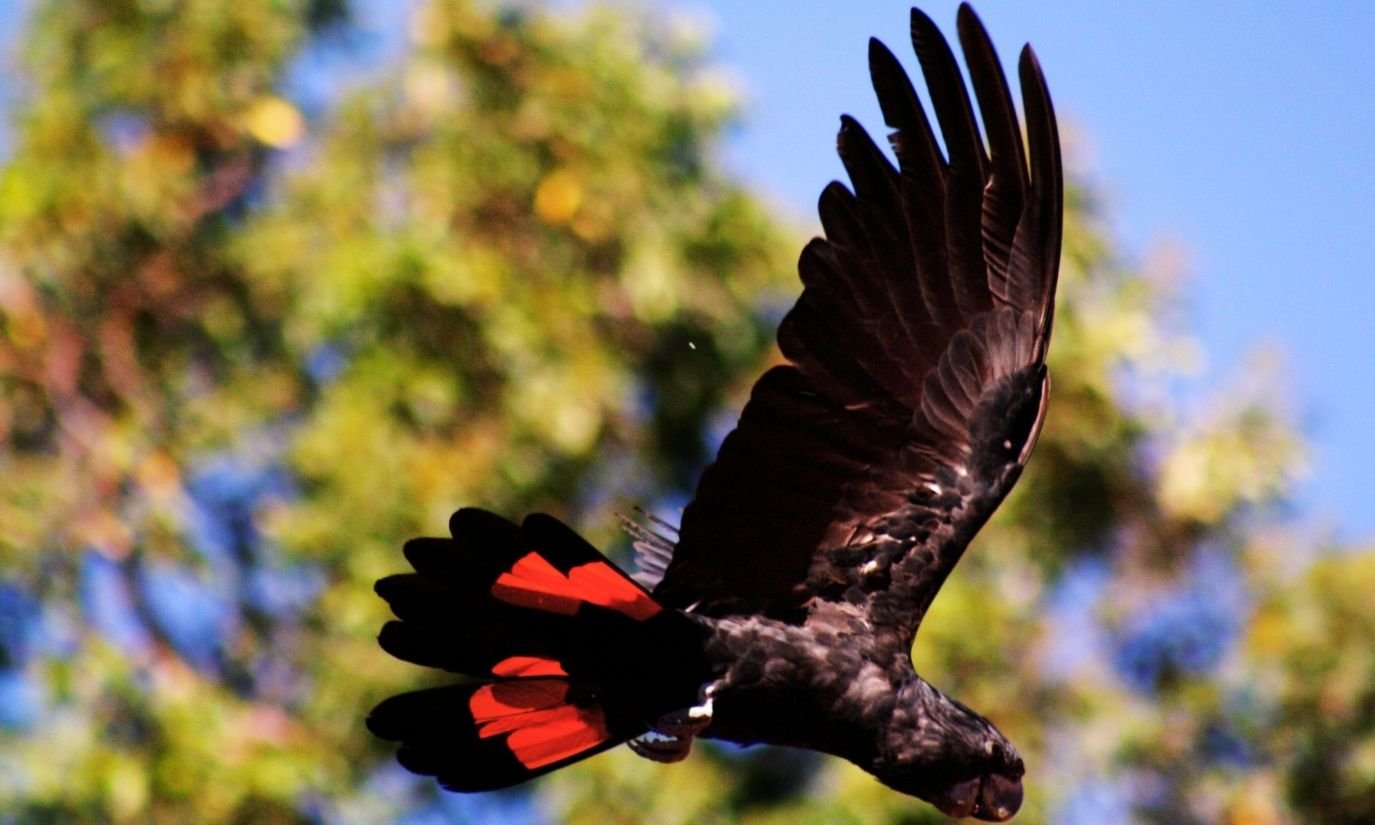
Smaller and quieter than other black-cockatoos, these distinctive birds are recognised by their red-orange tail panels, dark brown heads and strong lifelong pair bonds. Their survival depends on two essential resources: she-oak trees, which provide their main food source, and mature eucalypts with large hollows, which they need for nesting.
-
South-eastern Glossy Black-Cockatoos inhabit woodlands and forests stretching from central Queensland through to eastern Victoria. Much of their range overlaps with areas of human development, resulting in significant habitat loss and fragmentation.
Although these cockatoos are highly mobile, they rely on specific habitat features to survive, including:
She-oak woodlands – particularly species of Allocasuarina, which provide their primary food source.
Mature, hollow-bearing eucalypts – essential for nesting and typically located close to reliable drinking sites.
-
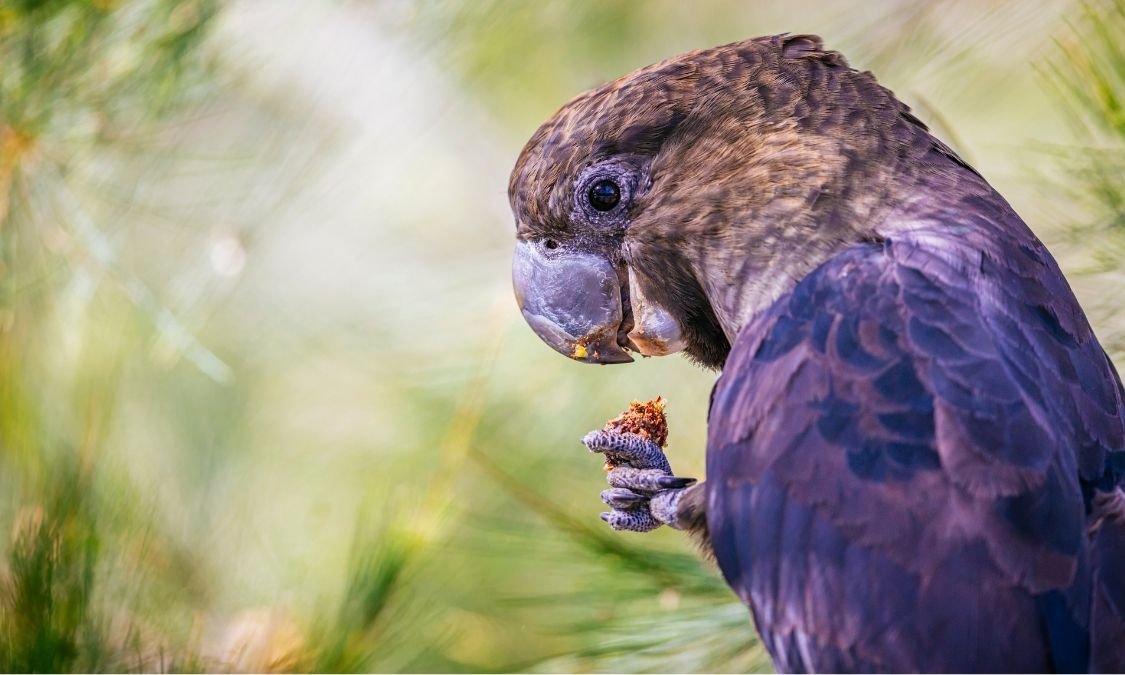
Glossy Black-Cockatoos are specialist feeders, relying almost exclusively on the seeds of native she-oaks. Their strong, curved bills are perfectly adapted to break open she-oak cones, leaving behind distinctive cone fragments known as “chewings” or orts beneath feeding trees.
These cockatoos can be highly selective about where they feed, often returning to favoured trees while overlooking others nearby. As not all she-oaks produce cones—and not all trees carrying cones are chosen for feeding—identifying and protecting important feed trees is a vital part of Glossy Black-Cockatoo conservation.
-
The South-eastern Glossy Black-Cockatoo faces a range of threats, including:
Habitat loss caused by land clearing for agriculture, housing and infrastructure.
Inappropriate fire regimes, including intense bushfires and planned burns that occur at the wrong time or burn too quickly or intensely.
Loss of nesting trees, particularly mature eucalypts with the large hollows these birds need to breed.
Climate change and drought, which can reduce the availability of food and suitable habitat.
-
How to Identify a South-eastern Glossy Black-Cockatoo
Head
Dull brown-black. Females usually have irregular yellow patches on the face, while males generally lack yellow facial markings. Juveniles have small, distinct yellow spots on the face and body.Body
Predominantly dull black. Fledglings, juveniles and subadults may have small pale yellow spots or barring across the belly, chest and wings.Tail
Females: Red, orange or yellow panels with black barring.
Males: Red panels without barring.
Juvenile and subadult males: Red panels with black barring.
Tail markings can vary, with some birds showing a mix of barred and unbarred feathers.
Call
A distinctive, drawn-out, wheezing or grating “kee-aiirrk” or “airrk” sound.Behaviour
Glossy Black-Cockatoos feed almost exclusively on the seeds of she-oaks (Allocasuarina and Casuarina species). If a black-cockatoo is feeding on a tree or shrub other than a she-oak, it is unlikely to be a Glossy Black-Cockatoo.They are usually seen alone or in small groups of two or three, although larger flocks can sometimes gather.
Identifying Feed Trees
A feed tree is a she-oak that produces cones and is used by Glossy Black-Cockatoos for feeding. Not all she-oaks are feed trees. Some, such as male trees, do not produce cones. While she-oaks carrying cones have the potential to be feed trees, Glossy Black-Cockatoos are highly selective about which trees and cones they choose.
They often return to the same preferred trees, even when other cone-bearing she-oaks are growing nearby. Identifying and protecting these important feed trees is therefore an important part of Glossy Black-Cockatoo conservation.
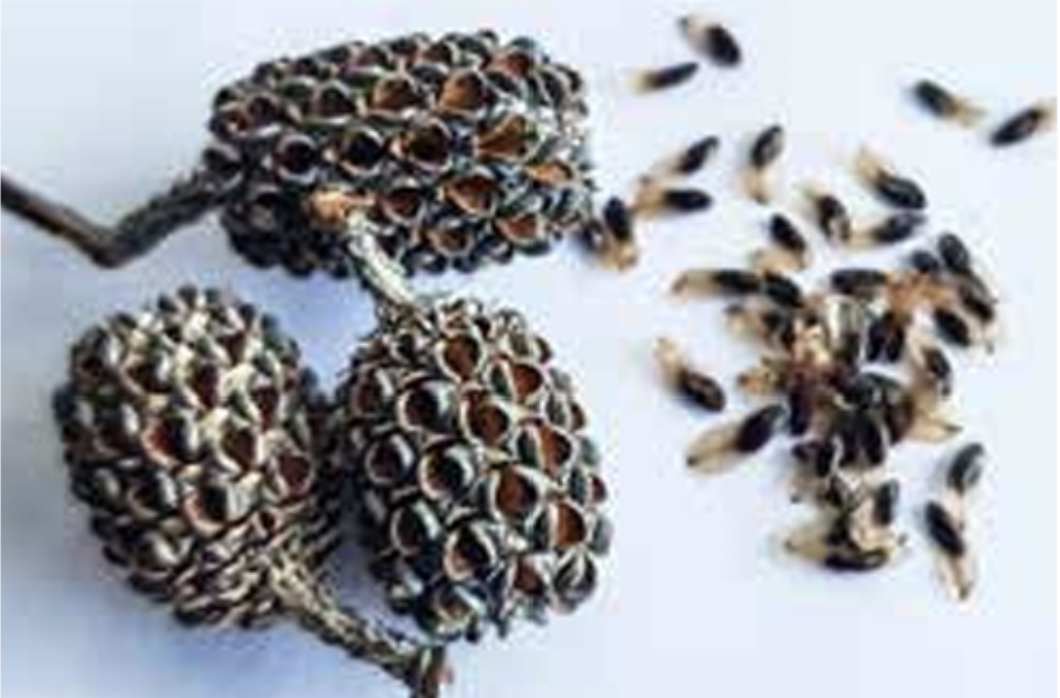
Recognising feeding evidence and habitat
-
When Glossy Black-Cockatoos feed on the seeds in she-oak cones, they leave behind chewed cones or fragments of cones, known as “chewings”, or “orts”. Glossy Black-Cockatoos will chew a cone from top to bottom, usually leaving behind many disc-shaped fragments of cone. When other parrot species (e.g., rosellas, corellas, and galahs) feed on she-oak cones, they usually leave behind chewed cones shaped like apple cores.
The presence of chewings can show us where Glossy Black-Cockatoos have been feeding, even when birds are no longer present. The colour of chewings can provide a good indication of when birds have visited the area:
whitish-green chewings were chewed days ago;
orange-red chewings were chewed weeks ago; and
brown-grey chewings were chewed months ago.
The number of chewings found under a tree can also indicate preference for that particular tree; if there are only one or two half-eaten chewings under a tree, a Glossy Black-Cockatoo has likely had a taste-test then decided to move on. Preferred trees often have a carpet of chewings underneath them.
-
Like other cockatoos, Glossy Black Cockatoos require tree hollows for nesting. Nesting hollows are typically in old, large, eucalypt trees (living or dead), with an entrance 20 – 25 cm wide and located 10 – 20 metres above the ground.
Glossy Black-Cockatoos often choose nesting hollows close to a drinking site, and usually return to the same nesting hollow over successive seasons.
Project Partners
This project received financial support from City of Coffs Harbour and BirdLife Australia.